
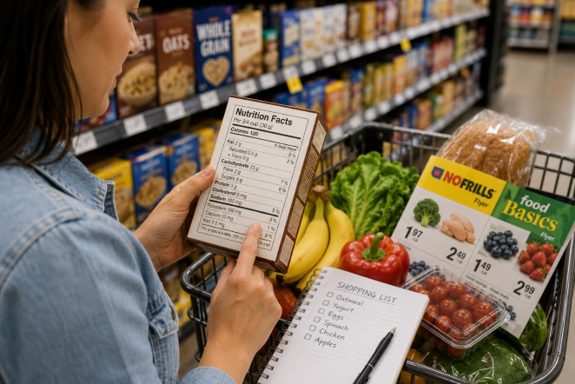
Most grocery shoppers compare prices before adding products to their cart, but price is only one part of making a smart purchase. Food labels provide valuable information about ingredients, nutrition, serving sizes, and product quality that can help shoppers choose items that suit their needs. Taking a few moments to read a label can make a significant difference, whether you’re shopping for a growing family, following a specific diet, or simply trying to make healthier food choices.
Weekly grocery flyers are a great starting point for finding deals, but informed shoppers look beyond the advertised price. Many Canadians browse the No Frills Flyer to discover current promotions and then compare similar products featured in the Food Basics Flyer. Once they’ve identified potential purchases, reading the food label helps determine which option offers the best overall value, not just the lowest cost.
Why Food Labels Matter
A food label tells you much more than the product’s name and price. It explains what you’re buying and helps you compare similar products before making a decision.
Most packaged foods include information such as:
- Ingredient list
- Nutrition Facts table
- Serving size
- Best-before date
- Storage instructions
- Allergen information
Understanding these details allows shoppers to choose products that match their dietary preferences and household needs.
Check the Ingredient List First
The ingredient list is often the easiest place to start. Ingredients are listed in descending order by weight, meaning the first few ingredients make up the largest portion of the product.
When comparing similar products, look for:
- Recognizable ingredients
- Whole grains instead of refined grains
- Lower amounts of added sugars
- Fewer artificial additives when possible
Reading ingredient lists can help shoppers identify products that better align with their nutrition goals without relying on front-of-package marketing claims.
Understand the Nutrition Facts Table
The Nutrition Facts table helps shoppers compare products quickly. Rather than looking at calories alone, consider the overall nutritional profile.
Pay attention to:
- Fibre
- Protein
- Sodium
- Added sugars
- Saturated fat
For example, two soups may appear similar, but one may contain considerably less sodium and more protein. Spending a few extra seconds comparing labels can lead to better purchasing decisions over time.
Compare Similar Products
Reading labels is most useful when comparing products within the same category.
You might compare:
- Breakfast cereals
- Yogurt
- Bread
- Pasta sauces
- Frozen meals
- Snack foods
The No Frills Flyer often features promotions across these categories. Instead of automatically choosing the lowest-priced option, compare the nutrition information to find a product that balances quality, nutrition, and value.
Don’t Be Influenced by Packaging Alone
Words such as “natural,” “premium,” or “wholesome” can attract attention, but they don’t always tell the complete story.
Instead of relying on marketing messages, check the label for factual information. Looking at ingredients and nutritional values gives a much clearer picture of what you’re buying.
This habit helps shoppers make decisions based on reliable information rather than advertising.
Consider Portion Sizes
Serving size is another detail that’s easy to overlook. Two products may appear similar, but their nutrition values may be based on different serving amounts.
Before comparing calories, sugar, or sodium, confirm that both products use comparable serving sizes. This creates a fair comparison and helps avoid misleading conclusions.
Understanding serving sizes is especially useful when shopping for snacks, breakfast cereals, and beverages.
Use Flyers to Find Better Options
Weekly flyers are useful because they introduce shoppers to products that may not have been on their original shopping list.
For example, while reviewing the Food Basics Flyer, you may notice a promotion on whole-grain bread or reduced-sodium soup. Comparing those products with similar items featured in the No Frills Flyer gives you the opportunity to evaluate both price and nutritional value before making a purchase.
Combining flyer comparisons with label reading creates a more informed shopping experience.
Smart Shopping Is About Informed Choices
Shopping smarter doesn’t always mean buying the cheapest product. It means understanding what you’re purchasing and choosing foods that match your lifestyle, nutrition goals, and household preferences.
Developing the habit of reading food labels takes very little extra time but can improve the quality of your grocery choices over the long term.
Conclusion
Food labels provide valuable information that goes far beyond the shelf price. By understanding ingredients, nutrition facts, serving sizes, and product details, shoppers can make decisions that support both their health and their budget.
The No Frills Flyer is an excellent resource for discovering weekly grocery promotions, while the Food Basics Flyer helps shoppers compare offers across different brands and product categories. Using flyers to find deals and food labels to evaluate products is a practical combination that leads to smarter grocery shopping every week.